
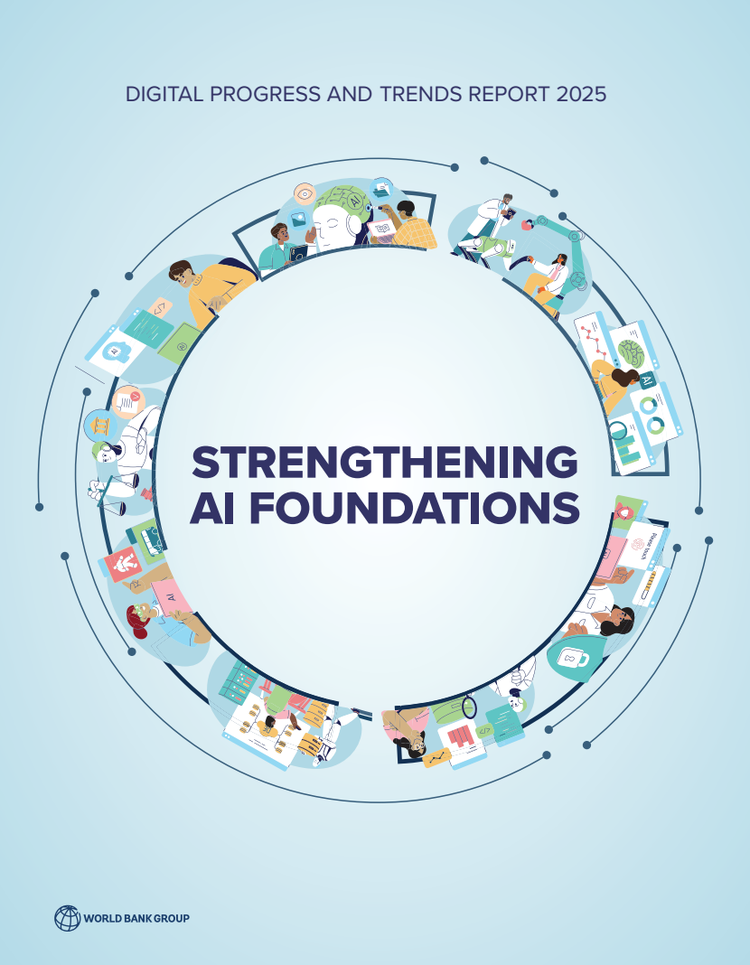
The World Bank Group launched its first digital strategy on 20 October 2026, aiming to expand connectivity, cut the cost of devices and data, and build AI readiness in developing countries. A companion initiative will offer shared, pay-as-you-go AI computing, with Africa and Latin America as its first focus.
The details
The strategy starts from a stark divide. More than 2 billion people were offline in 2025, and only 23% of people in low-income countries used the internet, compared with 94% in high-income countries, according to the World Bank.
It is organized around four pillars:
- Expand reliable connectivity, from international cables to local networks, and plan electricity and connectivity together where both are missing.
- Make entry-level smartphones and broadband more affordable through partnerships with manufacturers, operators, financiers and refurbishers.
- Expand digital ID, payments, secure data-sharing and job-linked digital skills.
- Build AI readiness, with practical “small AI” uses such as crop disease detection, health worker support and inventory management.
Privacy, cybersecurity and fraud protection apply across all four. The companion AI Infrastructure and Readiness Initiative would give governments shared GPU computing as an alternative to building standalone national data centres, with Cassava Technologies and NVIDIA as knowledge partners, the press release states. “Digital technology can help countries create jobs and make scarce resources go further,” said World Bank Group President Ajay Banga.
Why it matters for impact organizations and social enterprises
The strategy shifts the conversation from AI ambition to basic access. For most of the people Impact DOTS readers serve, the binding constraint is still an affordable phone and a data plan.
- Digital inclusion ventures: device financing, refurbishment and low-cost connectivity models are named directly as partnership areas.
- Health, agriculture and education NGOs: the “small AI” framing favours simple tools that run on limited connectivity, which suits field programs.
- African tech ecosystems: shared compute could lower the cost of building local-language and local-data AI tools.
- Program designers: fraud protection is a stated priority. The World Bank’s Global Findex 2025 found that only about half of mobile phone owners in low- and middle-income economies protect their phone with a password.
What’s next
The press release sets no numeric targets. It links the strategy to the Group’s goal of reaching one billion people through digital access and services by 2030 and to its Digital and AI Implementation Plan for FY26 to FY30. Country-level projects are expected to follow, but no timeline was announced.
FAQ
On 20 October 2026. It is the World Bank Group’s first digital strategy.
Connectivity, affordable devices and data, digital services and skills, and AI readiness.
A companion initiative offering governments shared, pay-as-you-go GPU computing, starting with Africa and Latin America.
Not in the launch release. It links to a separate goal of reaching one billion people with digital access and services by 2030.