
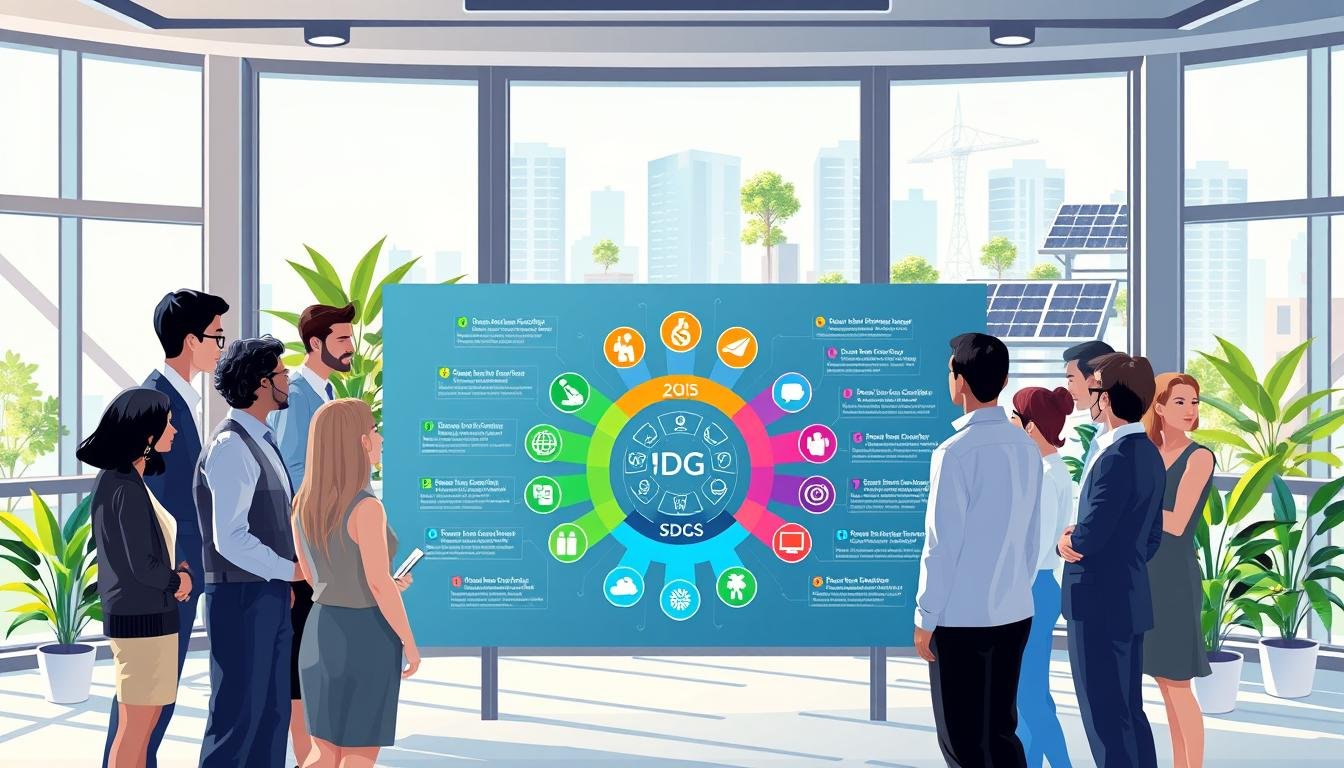
What if the most powerful plan for our planet’s future isn’t a secret, but a promise that 193 countries have already made?
In 2015, the United Nations General Assembly launched a bold blueprint for global prosperity. This plan consists of 17 interconnected objectives designed to tackle our world’s most pressing challenges.
These objectives form a universal call for action. They provide a clear framework for international policy aimed at transforming our collective future. The core idea is to ensure no person or nation gets left behind during the transition to a more equitable world.
This guide explores the pillars of this global agenda. We will look at how these targets impact the daily lives of billions and why they matter for everyone.
Key Takeaways
- The 17 Sustainable Development Goals were officially established by the UN in 2015.
- They serve as a shared blueprint for peace and prosperity for all people.
- Every country is called to take action on critical global challenges.
- The framework aims to create a sustainable future where no one is left behind.
- Understanding these goals is key to grasping how international policy shapes our world.
- The goals are deeply interconnected, addressing social, economic, and environmental needs.
- This comprehensive guide breaks down the complex agenda into clear concepts.
Setting the Stage: Introduction to the Global Goals
A shared vision for a better world took concrete shape when nations united behind a comprehensive agenda. In 2015, the United Nations General Assembly officially launched the sustainable development goals. This new framework replaced the previous international development plan.
Over 193 countries committed to this universal call for action. They pledged to work towards a common blueprint for peace and prosperity.
Purpose and Relevance of the SDGs
The purpose of these sustainable development objectives is profound. The United Nations emphasizes they are designed to fundamentally transform our economy, society, and daily life by 2030.
Their relevance lies in addressing root causes. The agenda provides a structured approach for world leaders to tackle poverty and environmental degradation globally.
Overview of the 2030 Agenda
The 2030 Agenda is the operational plan for these development goals. It serves as a detailed roadmap for international policy and cooperation.
By establishing this agenda, the global community aims to create a more resilient and equitable world. The focus is on long-term sustainable development for future generations.
This framework guides efforts to build a healthier planet and more just societies. It represents a collective commitment to measurable progress.
Historical and Global Context of the SDGs
Our current roadmap for a better planet didn’t appear overnight. It evolved from a series of critical global summits and declarations.
These meetings created the foundation for today’s international policy. Understanding this history shows how global cooperation has grown.
From the MDGs to the 2030 Agenda
The United Nations member states adopted the Millennium Declaration in 2000. This led to eight Millennium Development Goals.
These earlier development goals focused on reducing extreme poverty. The transition to the current framework marks a significant shift.
It moved the agenda toward addressing the root causes of global inequality. The new plan is more comprehensive and interconnected.
Key Milestones in International Policy
In 1992, over 178 countries adopted Agenda 21 at the Earth Summit. This was a major plan for global sustainable development and environmental protection.
The Johannesburg Declaration in 2002 built on this work. It stressed multilateral partnerships to fight poverty.
A decisive moment came at the Rio+20 conference in 2012. United Nations member states agreed to create a new set of sustainable development goals.
This process resulted in the ambitious 2030 Agenda we have today. Each milestone refined the global approach to sustainable development.
What are the 17 Sustainable Development Goals?
Each of the 17 objectives tackles a specific dimension of global well-being, from basic survival to advanced societal structures. Together, they form a complete agenda backed by 169 specific targets and hundreds of indicators.
Detailed Overview of Each Goal
The first objectives address fundamental human needs. They aim to end poverty and hunger everywhere. A third works to ensure healthy lives and promote well-being for all people.
Empowerment and opportunity come next. The framework champions inclusive quality education and the achievement of gender equality. It also secures clean water through sustainable management and access to modern energy.
The agenda then focuses on economic and social systems. It promotes growth, builds resilient infrastructure, and works to reduce inequality. It makes cities inclusive and ensures sustainable consumption and production patterns.
Environmental protection and global cooperation are crucial. The plan demands we take urgent action on climate change. It guides us to conserve oceans and promote sustainable use of land. Finally, it fosters peaceful inclusive societies and strengthens a global partnership for development.
Targets, Indicators, and Focal Areas
Each broad objective is broken down into precise, measurable targets. These targets provide a concrete roadmap for national and local action.
Hundreds of indicators help the United Nations and governments track real progress. This detailed structure turns the vision of the sustainable development agenda into actionable steps.
SDG goals explained: A Closer Look
Beyond the policy documents, real change is happening in communities worldwide. Targeted initiatives turn the broad vision into measurable improvements.
Real-World Examples and Success Stories
In Malawi, the ‘Right to Learn’ programme supported girls in Phalombe District. It significantly improved literacy rates and boosted student confidence.
This effort aligns with the United Nations agenda for inclusive education. It shows how local action supports global sustainable development goals.
Concern Worldwide reached over 45,500 people in 91 villages in Chad. Their Climate Smart Agriculture projects help mitigate climate change impacts.
Farmers using conservation agriculture produced 41% more peanuts. They also grew 35% more sesame compared to traditional methods.
In Ethiopia, an integrated livelihoods programme helped households. Livestock ownership rose from an average of 1.7 to 11.5 animals.
These stories demonstrate how targeted interventions contribute to economic growth. They create decent work opportunities for vulnerable populations.
Such localized actions are crucial for achieving the broader sustainable development agenda.
Impact on Economic, Social, and Environmental Sectors
Creating a better future requires a three-part strategy that strengthens economies, empowers people, and protects the planet. The sustainable development goals are designed for this balanced approach. They ensure progress in one area supports gains in another.
Driving Sustainable Economic Growth and Decent Work
The United Nations states that sustainable economic growth is vital. It lifts people from poverty and raises living standards globally. This kind of economic growth must be planned with care.
Environmental health is part of this planning. Growth should not harm our natural resources. Promoting decent work for all is a central pillar of the 2030 Agenda.
Stable employment builds long-term community stability. This focus turns economic growth into a force for widespread sustainable development.
Promoting Inclusive Education, Gender Equality, and Well-Being
Social progress depends on empowering every individual. Inclusive education and gender equality are powerful drivers for success. They are critical for the overall achievement of the development goals.
When societies invest in people’s well-being, they unlock potential. Healthier, more educated populations contribute more. This creates a positive cycle for continued sustainable development.
By focusing on these interconnected sectors, the sustainable development goals offer a complete blueprint. They aim for a world where sustainable economic growth, social justice, and environmental care advance together.
Assessment of Progress and Future Challenges
While international cooperation has sparked notable achievements, unprecedented global crises now test the resilience of the development agenda. The United Nations Secretary-General declared 2020 to 2030 the Decade of Action to accelerate progress.
Monitoring Developments and Measuring Success
Annual progress reports are developed in cooperation with the UN System. They track advancements across all 17 sustainable development goals.
This data-driven approach helps measure real success. It guides international policy toward the 2030 deadline for sustainable development.
COVID-19 Impact and the Road Ahead
The pandemic turned back decades of progress in some regions. It was a major setback for the global development goals.
Climate change remains a significant threat. Global temperatures in 2020 reached 1.2°C above the pre-industrial baseline.
Despite these challenges, the international community uses data to navigate the road ahead. The focus is on achieving the sustainable development agenda by 2030.
Conclusion
This comprehensive blueprint for progress stands as one of the most significant multilateral agreements in modern history. The 17 Sustainable Development Goals represent an ambitious and necessary framework for addressing critical global challenges.
The path toward 2030 has faced complications, including the COVID-19 pandemic. Yet, the commitment of 193 nations remains a powerful force for change.
By focusing on measurable targets and indicators, the international community can track progress and hold institutions accountable. Every individual, government, and organization plays a vital role in eradicating poverty and protecting our planet.
The ongoing work to achieve these development goals is essential. It ensures a peaceful, prosperous, and sustainable future for all people worldwide. This global agenda guides our collective effort toward meaningful development goals.