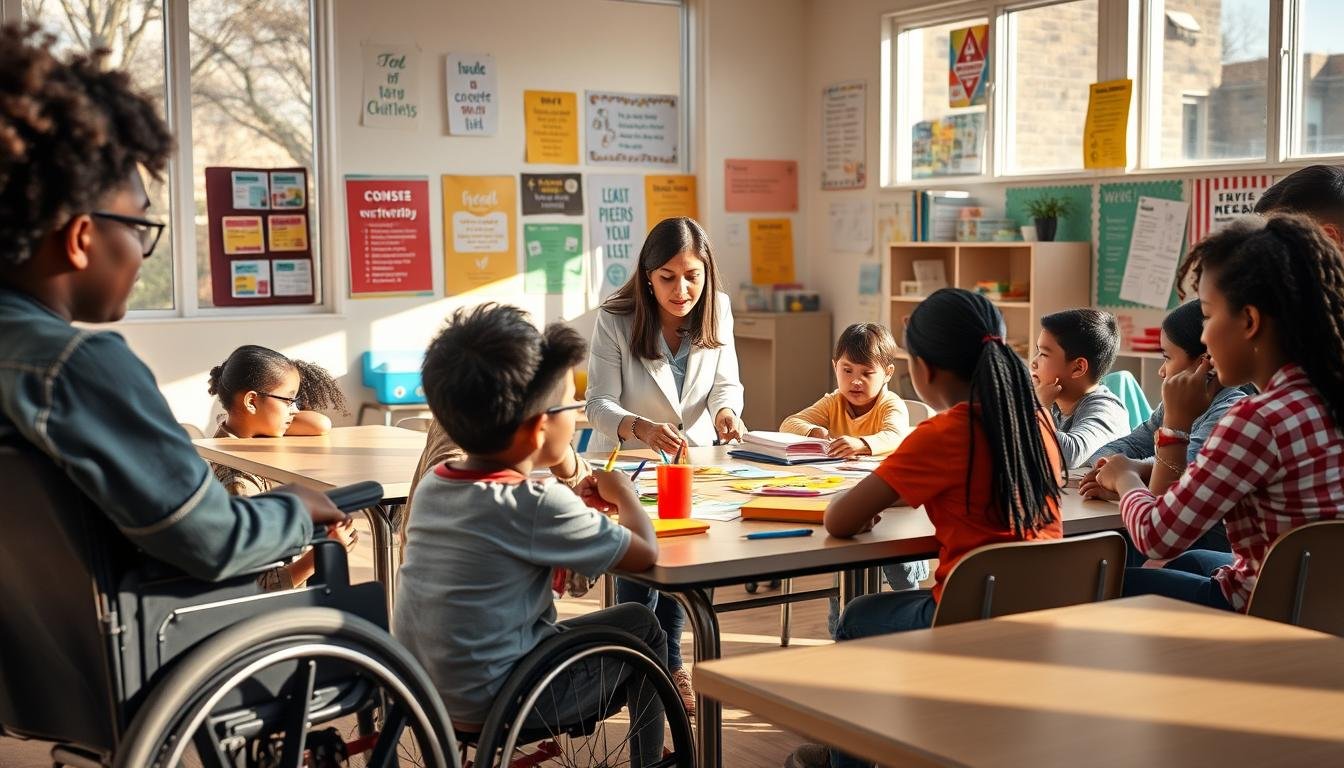
What if the secret to unlocking every child’s potential lies not in separating them, but in bringing them together? Modern classrooms across America are answering this question with a powerful shift toward inclusive practices.
U.S. Department of Education data shows a remarkable change. In 2019, nearly 65% of students with disabilities learned alongside their peers in general education settings. This jumped from just 46.5% in 2000.
This approach ensures all young people receive equal access to quality learning. It creates spaces where every student feels valued and respected. Educators implement strategies that support diverse abilities and backgrounds.
This guide explores how inclusive practices transform schools. We’ll examine the benefits, components, and practical strategies that make classrooms work for all learners.
Key Takeaways
- Inclusive education has grown significantly in US schools over the past two decades
- All students benefit from learning alongside peers with diverse abilities
- Effective inclusive practices require proper support and accommodations
- Teachers play a crucial role in creating welcoming classroom environments
- Research shows inclusive approaches boost both academic and social outcomes
- Successful implementation involves adapting curriculum and instruction methods
- Inclusive classrooms prepare students for diverse real-world environments
Understanding Inclusion in Education
What transforms a regular classroom into a vibrant community where all learners thrive together? This shift begins with understanding the core concepts that make diverse learning spaces successful.
Defining the Inclusive Classroom Approach
An inclusive classroom values and respects every child. It creates safe spaces for diverse backgrounds and abilities.
This approach ensures all young people feel welcomed. They participate fully in learning activities with their peers.
Historical Evolution of Inclusive Education in the US
The Individuals with Disabilities Education Act (IDEA) of 1975 changed everything. This law required schools to educate children with disabilities alongside non-disabled peers.
IDEA emphasized the least restrictive environment provision. This meant students should learn together whenever possible.
The approach has expanded beyond disabilities over the years. It now embraces diversity in race, gender, ethnicity, and more.
Key Principles of Effective Inclusion Practices
Equity ensures every student receives what they need to succeed. Respect means valuing each person’s unique contributions.
Accessibility removes barriers to participation. These principles work together to create supportive environments.
Educators play a crucial role in challenging biases. They foster belonging through thoughtful curriculum choices and teaching methods.
Group activities promote collaboration among students with different abilities. Diverse materials ensure all young people see themselves represented.
U.S. Department of Education data shows significant progress since 1975. Continuous teacher training maintains these positive environments.
These practical applications make classrooms work for everyone. They set the foundation for understanding why this approach matters so much.
Why Inclusion Matters for Student Outcomes
Beyond just classroom arrangements, what measurable impacts does bringing diverse learners together create? The evidence shows powerful benefits across academic performance, social development, and long-term wellbeing.
Academic Benefits for All Learners
Research reveals surprising advantages for every student in mixed-ability settings. Studies show improved math and reading scores for those without disabilities.
These environments challenge all young people to think differently. They develop stronger problem-solving skills through diverse perspectives.
Teachers often enhance their instruction methods to meet varied needs. This benefits the entire class with more engaging and effective teaching approaches.
Social-Emotional Development Advantages
The National Center for Education Statistics found remarkable social benefits. Students in these settings show 7% higher empathy levels.
They also report lower anxiety and depression rates. Stronger peer relationships develop naturally through daily interaction.
These connections build resilience and compassion. Young people learn to appreciate different abilities and perspectives.
Long-term Impact on Student Well-being
CDC research demonstrates lasting positive effects. Supportive policies reduce emotional distress for all youth.
Inclusive environments decrease violence and harassment incidents. They create safer spaces where every student feels valued.
Systematic reviews of 34 studies confirm protective mental health effects. School connectedness becomes a powerful buffer against various challenges.
These practices address the current youth mental health crisis effectively. They prepare students for diverse real-world environments beyond school walls.
Case studies like Jamal and Maria show transformed outcomes. Both academic and personal growth flourishes in welcoming classrooms.
The evidence clearly shows this approach benefits everyone. It represents a net gain for all students in measurable ways.
Essential Components of Inclusive Classrooms
How do successful learning spaces transform into environments where all young people thrive? The answer lies in three foundational elements that work together seamlessly.
Creating a Supportive Physical Environment
Classroom layout makes a big difference for all learners. Flexible seating options accommodate different physical needs.
Wide aisles ensure easy movement for those with mobility challenges. Clear visual signage helps students navigate the space independently.
Lighting adjustments benefit young people with sensory sensitivities. These physical changes create welcoming spaces for everyone.
Developing Inclusive Curriculum and Materials
Diverse learning materials reflect various cultures and perspectives. Literature from multiple backgrounds helps every student feel represented.
Drexel University recommends incorporating multicultural awareness into teaching. This approach validates diverse experiences and backgrounds.
Varied teaching methods address different learning styles. Visual, auditory, and kinesthetic activities engage all young people.
Implementing Universal Design for Learning
UDL principles provide multiple ways to engage with content. They offer various means of representation and expression.
Flexible options allow students to demonstrate knowledge differently. Some may prefer written work while others choose presentations.
This framework supports learners with diverse abilities. It ensures equal participation through thoughtful accommodations.
Ongoing evaluation maintains effective practices. Teachers regularly assess what works and make necessary adjustments.
These components create classrooms where all young people succeed. They form the foundation for truly welcoming learning communities.
Practical Strategies for Promoting Inclusion
How can teachers turn theory into daily practice that benefits every learner? The answer lies in actionable approaches that create welcoming spaces for all young people.
Getting to Know Your Students Personally
Building strong connections starts with understanding individual needs. Simple questionnaires help identify learning preferences and interests.
One-on-one conversations reveal personal strengths and challenges. These insights guide how educators support each young person.
Icebreaker games and regular seat changes encourage interaction. They help build a sense of community among peers.
Employing Diverse Teaching Methods
Varied approaches ensure all learners can access the curriculum. Visual aids help those who learn through seeing.
Auditory activities benefit students who learn by listening. Hands-on projects engage tactile learners effectively.
Group work allows collaboration between different abilities. Alternative assignments let young people show knowledge in various ways.
Facilitating Respectful Classroom Discussions
Open dialogues require clear guidelines for respectful communication. Establish rules collaboratively with your class.
Model inclusive language that avoids stereotypes. Encourage active listening and empathy during conversations.
The University of Illinois offers professional development programs. Their Diversity & Equity certificate enhances educator skills.
Research shows these practices reduce bullying incidents. They increase student investment in learning activities.
Drexel University studies confirm better outcomes for all young people. These strategies create environments where every student feels valued.
Supporting Students with Diverse Learning Needs
How do we ensure every learner receives the right tools to thrive in today’s classrooms? The answer lies in thoughtful approaches that address individual requirements while maintaining high expectations for all.
Accommodations for Students with Disabilities
Effective accommodations create equal opportunities for success. Extended time on tests helps those who process information differently.
Modified assignments adjust complexity without reducing standards. Assistive devices transform how young people access content.
Text-to-speech software supports reading challenges. FM systems amplify teacher voices for hearing impairments.
The Department of Education highlights technology’s transformative role. Emerging tools continuously reduce barriers for various conditions.
Individualized Education Plans (IEPs) guide these supports. Collaboration with special education staff ensures proper implementation.
Differentiated Instruction Techniques
Tailored teaching methods address unique learning styles. Visual learners benefit from graphic organizers and charts.
Auditory approaches include recorded lessons and discussions. Kinesthetic activities engage hands-on learners effectively.
Flexible grouping allows peers to work at appropriate levels. Tiered assignments provide challenge options for all abilities.
Ongoing teacher training maintains these effective practices. Resource allocation ensures materials meet diverse requirements.
Alternative Assessment Methods
Traditional tests don’t always capture true understanding. Portfolios showcase growth over time through various work samples.
Oral presentations demonstrate knowledge verbally. Projects allow creative expression of concepts.
Performance-based evaluations measure real-world application. These approaches provide fair evaluation for all learners.
Case studies like Jamal show remarkable progress with proper support. Maria’s story demonstrates how alternative methods reveal hidden talents.
These strategies ensure every student feels capable and valued. They create classrooms where diverse abilities become strengths rather than challenges.
The Role of Technology in Inclusive Education
How does modern technology bridge learning gaps for students with diverse needs? Digital tools create pathways where every student can access the curriculum and participate fully.
Assistive Technology Tools and Applications
Screen readers transform text into speech for visual impairments. Braille displays provide tactile reading options. Captioning services make audio content accessible.
Speech recognition software helps those with writing challenges. Alternative keyboards assist students with physical disabilities. These tools remove barriers to participation.
The Department of Education confirms these technologies improve outcomes. They help young people with various conditions engage in classroom activities.
Digital Resources for Diverse Learners
Educational software adapts to different learning styles. Online platforms offer multiple ways to explore content. Interactive programs keep students engaged.
Word prediction software supports writing tasks. Visual organizers help with planning and organization. These resources cater to individual needs effectively.
Digital tools allow customization for various abilities. They ensure all learners can access quality materials.
Implementing Technology Accessibility Standards
Schools must follow accessibility guidelines for digital tools. Proper training helps educators use technology effectively. Funding supports the acquisition of necessary devices.
Professional development ensures staff can maximize benefits. Research shows technology integration improves post-school outcomes. It prepares students for real-world environments.
These practical steps make learning accessible to all. Technology truly transforms instructional approaches for diverse abilities.
Building an Inclusive School Community
How do we transform individual classrooms into cohesive learning environments where everyone belongs? The answer lies in building strong connections between educators, families, and students themselves.
Professional Development for Educators
Effective training programs help staff develop cultural awareness. They learn strategies for supporting diverse abilities.
Workshops on social-emotional practices build essential skills. These sessions address various learning styles and backgrounds.
Ongoing coaching ensures teachers can implement new techniques. The Inclusive Schools Network emphasizes continuous improvement.
Collaborating with Families and Caregivers
Regular communication builds trust with families. Newsletters and parent-teacher conferences keep everyone informed.
Family engagement events create welcoming atmospheres. These gatherings help caregivers understand classroom practices.
Surveys gather valuable feedback from stakeholders. This input guides policy development and program adjustments.
Fostering Peer Support Systems
Buddy programs pair students with different abilities. These partnerships build natural friendships and understanding.
Group activities encourage collaboration among peers. They create opportunities for mutual support and learning.
Research shows these approaches reduce disciplinary issues. They also decrease absenteeism and improve overall climate.
Leadership commitment ensures these systems remain effective. Regular evaluation maintains quality support for all young people.
Building strong communities requires teamwork from everyone involved. When schools, families, and students work together, amazing things happen.
Conclusion
Imagine a classroom where every learner achieves their fullest potential through shared experiences. Research confirms this approach boosts academic performance and social growth for all young people.
Successful implementation requires ongoing dedication from educators and staff. Programs like those at University of Illinois and Drexel University offer valuable professional development resources.
These practices create environments where each student feels valued and supported. They prepare young minds for diverse real-world challenges.
Commit to these strategies today. Transform your classroom into a space where every learner thrives and belongs.
FAQ
What is an inclusive classroom?
An inclusive classroom is a learning space where every student, regardless of abilities or background, is welcomed and valued. It emphasizes access, participation, and support so all learners can thrive together.
How does inclusion benefit students without disabilities?
Students without disabilities gain empathy, improved social skills, and exposure to diverse perspectives. They often develop stronger academic abilities through collaborative learning and varied teaching methods.
What are some common accommodations used in inclusive settings?
Common accommodations include extended time for tasks, modified assignments, visual aids, assistive technology, preferential seating, and breaks during activities to support focus and engagement.
How can teachers manage diverse needs in one classroom?
Teachers can use differentiated instruction, flexible grouping, and universal design for learning. Building relationships and using varied materials also help address individual requirements effectively.
What role do parents play in supporting inclusion?
Parents provide valuable insights into their child’s strengths and needs. Collaboration between families and school staff ensures consistent support and reinforces learning both at home and in the classroom.
Are there legal requirements for schools to provide inclusive education?
Yes, laws like the Individuals with Disabilities Education Act (IDEA) and Section 504 of the Rehabilitation Act require public schools to offer a free appropriate public education in the least restrictive environment.