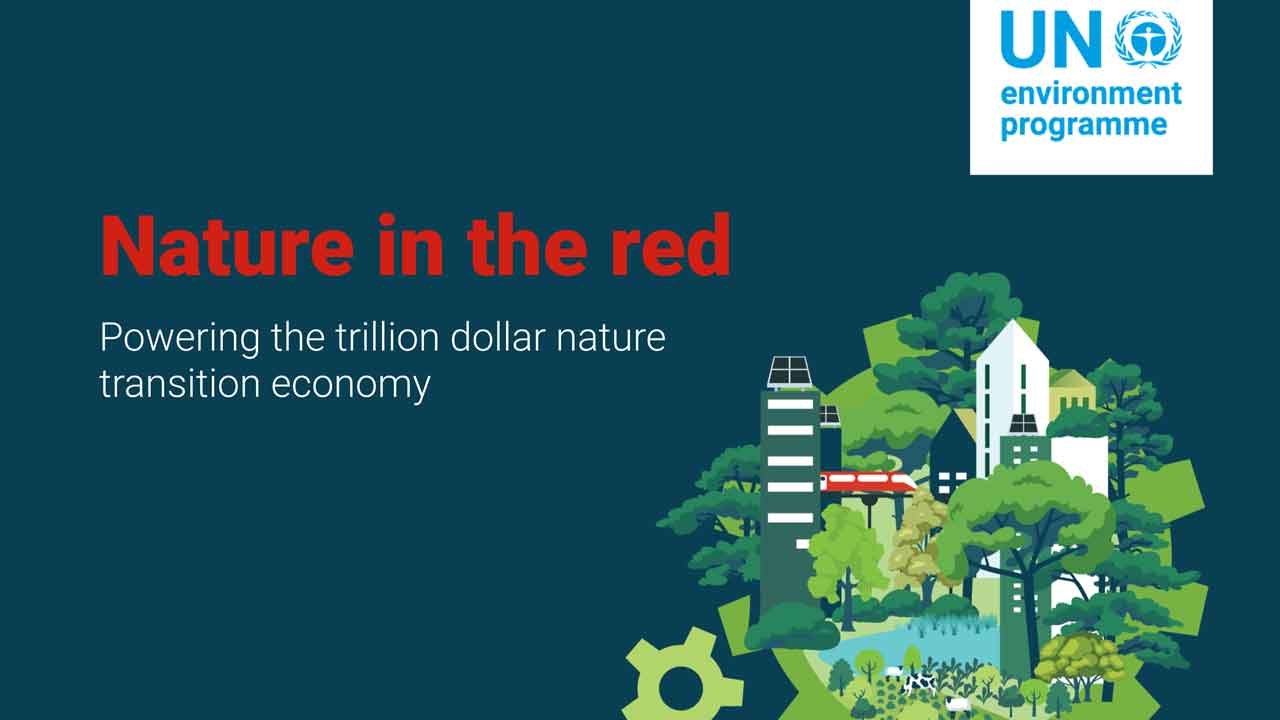
About $7.3 trillion flowed in 2023 into activities that damage nature, against $220 billion for nature-based solutions, a ratio of roughly 30 to 1, according to the UN Environment Programme’s State of Finance for Nature 2026. Finance for nature-based solutions would need to rise 2.5 times, to $571 billion a year, by 2030.
The report, released on 22 January 2026, compares money that harms ecosystems with money that protects or restores them. Its figures are widely used by teams working on nature finance, biodiversity and ecosystem-based adaptation.
About the report
| Publisher | UN Environment Programme (UNEP) |
| Published | 22 January 2026 |
| Data covered | Public and private finance flows in 2023 |
| Latest edition? | Yes, as of October 2026 |
Nature-negative flows include private investment in high-impact sectors and public subsidies that drive ecosystem damage. Nature-based solutions cover finance for protecting, restoring and sustainably managing ecosystems to address social and environmental challenges.
Key findings
- About $7.3 trillion went to nature-negative activities in 2023, most of it private capital in energy, utilities, industrials and basic materials, plus public subsidies to fossil fuels, agriculture, water, transport and construction, according to UNEP.
- Finance for nature-based solutions totalled $220 billion in 2023, and nearly 90% of it came from public spending, the State of Finance for Nature 2026 finds.
- Private finance for nature-based solutions was only $23 billion in 2023, according to UNEP.
- The ratio between nature-negative and nature-positive finance is about 30 to 1, the report shows.
- Annual finance for nature-based solutions must rise 2.5 times to $571 billion by 2030, about 0.5% of global GDP, according to the State of Finance for Nature 2026.
- More than 700 organizations representing $20 trillion in assets have adopted the recommendations of the Taskforce on Nature-related Financial Disclosures, UNEP reports.
What the State of Finance for Nature 2026 means for nature-focused ventures and NGOs
UNEP proposes a Nature Transition X-Curve: phasing out destructive investments and harmful subsidies while scaling up high-integrity nature-based solutions. Both sides of that curve create work for the impact sector.
- Private nature finance is small, so early movers matter. $23 billion is a tiny share of private capital. Investors who build expertise in regenerative agriculture, restoration and nature-positive supply chains are entering a market with room to grow.
- Subsidy reform is a lever for MENA and Africa. Public subsidies to agriculture and water are part of the nature-negative total. Policy organizations and researchers in water-stressed countries now have a global figure to anchor arguments for reform.
- Integrity will decide credibility. UNEP stresses high-integrity solutions. NGOs and ventures should document biodiversity and community outcomes with recognized methods to avoid being dismissed as greenwashing.
- Disclosure is spreading. With TNFD adoption across $20 trillion in assets, companies will ask suppliers and partners for nature data. Small enterprises that can provide it gain an edge.
Organizations working on ecosystem-based adaptation can look at open calls such as the Global EbA Fund medium-size grants, and at our guide to ESG reporting.
Download the full report
UNEP publishes the State of Finance for Nature 2026 free of charge on its website. The report is authored by UNEP, not by Impact DOTS.
FAQ
About $7.3 trillion in 2023, according to UNEP’s State of Finance for Nature 2026.
$220 billion in 2023, nearly 90% of it public. Private finance contributed $23 billion.
Annual finance for nature-based solutions must reach $571 billion by 2030, about 0.5% of global GDP.
A UNEP framework for phasing out nature-negative investment and subsidies while scaling up nature-positive finance at the same time.
UNEP released the State of Finance for Nature 2026 on 22 January 2026.
Sources
- UNEP: State of Finance for Nature 2026
- UNEP: We’re funding nature’s decline. Here’s how to turn it around