
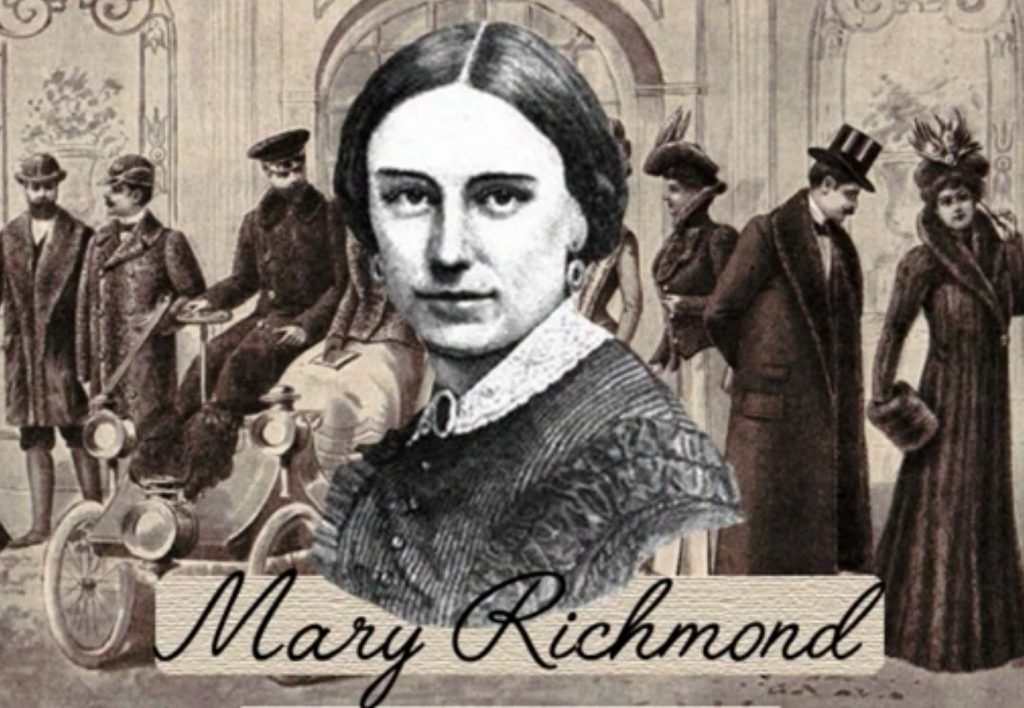
One striking fact: a single practitioner’s manuals helped shape an entire profession across decades. mary ellen richmond transformed charity into a disciplined field and left a blueprint for modern social work.
Born in 1861 and active until 1928, her early life shaped a drive to study poverty and systems. Raised by a reform-minded grandmother, she moved from friendly visiting to systematic casework.
Her ideas pushed agencies to evaluate the person in context, keep records, and collaborate across services. Those methods turned informal help into a recognized work profession.
She led organizations in Baltimore, Philadelphia, and New York, wrote cornerstone texts, and campaigned for child labor laws, compulsory education, and juvenile courts. Her role in social welfare history and the history social work remains central to how practitioners train and practice today.
Key Takeaways
- Foundational figure: mary richmond codified social work practice.
- From charity to profession: she advanced systematic casework and records.
- Policy impact: reforms on child labor and education grew from casework insights.
- Lasting methods: assessment, documentation, and agency collaboration endure.
- Geographic reach: influence spanned Baltimore to york city and new york institutions.
Expert Roundup: How pioneers and practitioners interpret Richmond’s life, work, and enduring methods
Experts trace her reform instincts to a childhood where debate and civic purpose were regular dinner-table topics. This roundup gathers voices that link early context to later professional practice.
Early life influences that shaped a reformer
Scholars note that a home steeped in suffrage and social debate built the critical reasoning that guided her casework. Graduating at 16 and facing harsh publishing jobs in new york sharpened her awareness of labor precarity.
Church networks in Baltimore expanded her social capital and led to the Charity Organization Society, where she saw limits of untrained friendly visiting. Experts say that moment pushed her toward formalized training and applied philanthropy.
Why an expert roundup matters now
Today’s social workers find direct lines from her record-keeping and person-in-situation ideas to modern accountability and outcomes frameworks in new york city agencies. Practitioners emphasize that structured assessment, supervision, and ethical training protect both clients and workers.
Takeaway: revisiting her methods helps the social work profession map historical insights to evidence-based practice and equity goals in contemporary social welfare history.
From friendly visiting to Social Diagnosis: frameworks that professionalized social work
Voluntary visiting gave way to trained caseworkers who used records and research to steer relief. The Charity Organization Society pioneered intake, investigation, and coordinated aid. This shift created consistent standards for who received help and how agencies worked together.
Charity Organization Society roots
Early friendly visiting among volunteers focused on moral oversight. Under leadership in city COS branches, that model moved toward trained social casework. Supervisors, manuals, and paid workers replaced ad hoc visits.
Russell Sage Foundation, New York City
At the russell sage foundation in new york city, networks and record keeping scaled up. Standardized files and training improved referrals and research capacity across agencies.
Social Diagnosis and method
Social diagnosis (1917) framed the client as a person-in-situation and mapped environmental forces. The method listed six sources of power, household, personal, neighborhood, civil agencies, private agencies, and public bodies, to mobilize help.
Study of widows and practice texts
The study nine hundred eighty-five widows used case data to show needs and guide resources. Texts like The Good Neighbor in the Modern City and What Is Social Case Work? sharpened assessment, planning, and ethical urban practice.
Advocacy in action
Case records informed campaigns for compulsory education, child labor laws, juvenile courts, and legal protections for deserted wives. Documentation and shared standards foreshadowed modern supervision and quality improvement.
Mary Ellen Richmond
Scholars credit her push for formal training with turning ad hoc assistance into a teachable professional practice. Experts say that this shift made casework repeatable, testable, and open to improvement through supervision and curricula.
Expert perspectives on impact: building the social work profession, training pathways, and the role of caseworkers
Experts note that mary ellen richmond moved the field toward structured education. After her 1897 call for a training school, she taught applied philanthropy and helped shape early programs that anchored the social work profession in colleges and agencies.
In her model, caseworkers practiced disciplined assessment, documentation, and mobilization of supports. These methods equipped social workers to translate field records into advocacy and policy change.
Vocabulary and variations experts use
Scholars distinguish between the field and the method: social work as the broad field, social casework as the method, and social welfare as the policy ecosystem. Charity organization societies served as early coordinating bodies that tested these practices in community settings.
Beyond New York: diffusion and resources
With backing from the russell sage foundation, manuals, record frameworks, and research spread to other organization societies. Conferences, publications, and replicated training programs helped workers in many cities adopt consistent standards.
Experts also highlight her rise from a high school graduate at 16 to national leadership as a model of merit-based development in welfare history.
Conclusion
Conclusion, Mary Richmond changed scattered charity into a disciplined practice by defining social casework and linking records to reform. Her books, from Friendly Visiting among the Poor and The Good Neighbor in the Modern City to Social Diagnosis and A Study of Nine Hundred and Eighty-Five Widows, remain practical resources for social welfare and social work in New York and beyond.
Her insistence on training, supervision, and data-led methods shaped how workers learn and how agencies develop. Russell Sage partnerships in New York City showed how philanthropy, research, and practice can scale better outcomes. Remember her life arc (1861–1928) as a model of resilience for the social work profession and a prompt to keep integrating evidence, advocacy, and humane practice.